
The Supreme court case of Buck v. Bell was decided on May 2, 1927 and was the fist case with the Virginia Sterilization act to make it to the Supreme Court. It constitutionally allowed Virginia to provide state enforced sterilization if an individual was deemed feeble-mided or unfit to reproduce.
Carrie Elizabeth Buck was born on July 2, 1906, in Charlottesville VA to her parents Frank and Emma Buck. Little is known about Frank Buck, he seemingly disappears from the books after his daughter’s birth. In 1920 Carrie’s mother, Emma Buck, was deemed a “low-grade moron” and promiscuous for having a child out of wedlock. She was then committed to the Virginia State Colony for Epileptics and Feebleminded in Madison Heights, near Lynchburg. After her mother’s commitment, Carrie was adopted at the age of three and raised by her foster parents, the Dobbs. John and Alice Dobbs would raise Carrie as one of their own. Carrie would help out around the house; in the kitchen, cleaning the house, and just chores in general. She would go on to complete 5 years of school and reach grade six. In 1923, when Carrie was around the age of sixteen or seventeen years old, she became pregnant as a result of being raped by the Dobb’s nephew, Carries foster cousin, Clarence Garland. Carries foster parents were very embarrassed by their nephew’s actions and as a result wanted to think of a way to cover it up. Her foster parents began to make up lies about their foster child. They would claim she was guilty of “moral delinquency”1 even though she had never had any problems with drugs or alcohol. Her foster parents also gave some conflicting information. They said she was “subject to epilepsy, headaches, nervousness, fits or convulsions” and later confirmed she had “no fits or spasms of any kind” But, when asked when Carries’ epilepsy first appeared, they said she has had it since she was a child.2 This was one of the first instances of a common theme of this story, how no one was on her side or there to defend her. Carries own legal guardians went so far as to make up lies about their foster daughter rather than accept fault and subject their nephew to the proper punishment. Unfortunately, similar to her mother, Carrie would be deemed promiscuous and therefore feeble-minded as a result of the pregnancy. Her foster parents would motion to petition to commit Carrie to the same institution her mother had been placed in. The Virginia State Colony for Epileptics and Feebleminded would accept the Dobbs’ request and accept Carrie into their institution. Carrie would remain with her foster parents until the birth of her daughter Vivian Buck. Following the birth of Vivian Buck the Dobbs’ agreed to take custody of the child under the agreement that if she grew up and was deemed feebleminded the Virginia State Colony for Epileptics and Feebleminded would take her.
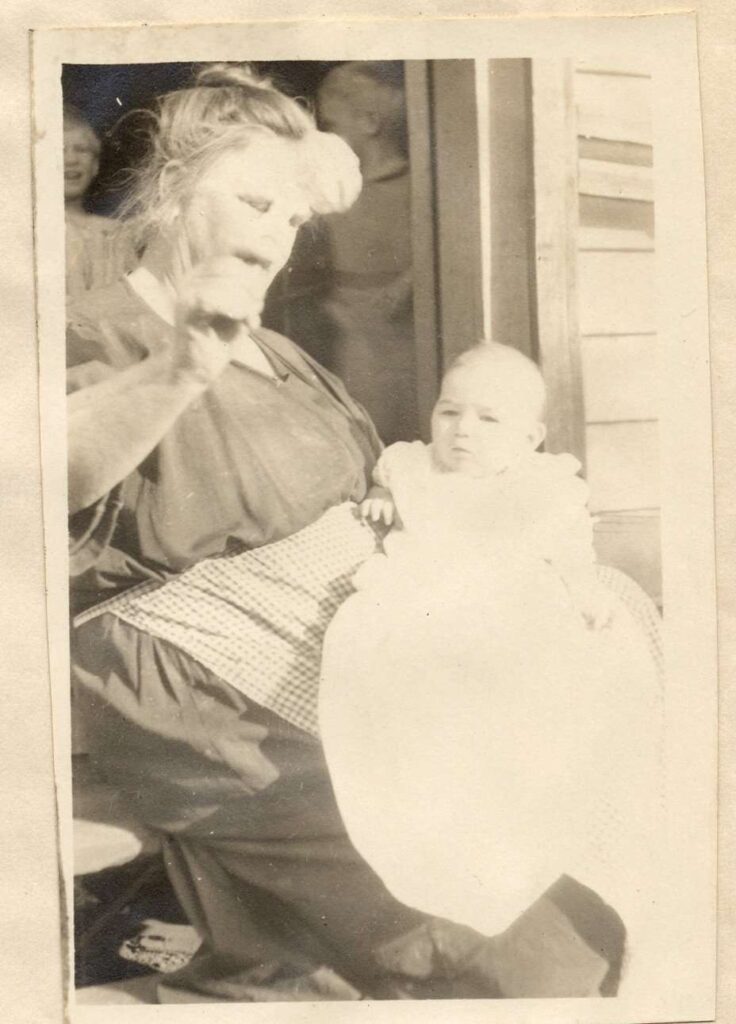
Just two months after the birth of her daughter Carrie, would go on to join her mother at the Virginia State Colony for Epileptics and Feebleminded for four and a half years. This would be the longest period in their life where Carrie and her mother would be together. 4
The superintendent of the Virginia State Colony for Epileptics and Feebleminded at the time was Albert S. Priddy. Priddy would give Carrie Buck an examination upon her enrollment to the institution. He would discover that she was in good health, clean, well taken care of, and free of infection. He would also discover the Dobbs’ report to be inaccurate, they claimed that Carrie had a “temper and hallucinations”, but Priddy found no evidence of psychosis. The Mental examiner also said that Carrie had gone to school for nine years and repeated one grade and listed her IQ as fifty-six, which is very low. However, she completed five years of school and repeated no grades.5
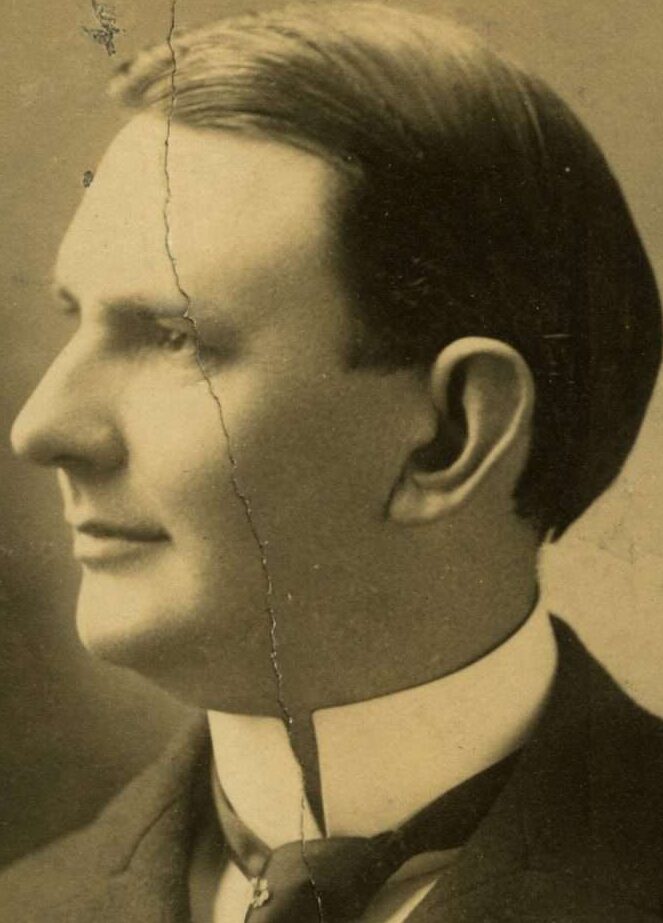
In March of 1924, The General Assembly passed a law that allowed state-enforced sterilization for those deemed “genetically unfit for procreation”. In September of that year, Albert S. Priddy submitted a list of sixteen candidates to the Virginia Colony for Epileptics and Feebleminded’s board to be approved for sterilization. Carrie Buck was a part of this list. Priddy was a very cautious man, so, before the surgery to sterilize any of the individuals on the list, he wanted to test the constitutionality of this new law. Priddy would put off all the other sterilization efforts except Carrie Buck, who would be the new test subject for his experiment. Carrie was selected due to her connections with her mother. They were both judged as feebleminded and accused of sexual misconduct, so Priddy would set out to collect as much information as possible about their supposed “hereditary defects”.7
Buck v. Priddy/ Buck v. Bell
On November 18, 1924, Judge Bennet T. Gordon would hear the testimonies of the Buck v. Priddy case.
Some key figures in the court case:
Robert G. Shelton, Carrie Buck’s state-appointed Guardian who, at the request of Priddy, agreed to repeal the sterilization law in court to test its constitutionality.
Irving P. Whitehead was Carrie Buck’s defense attorney and a string supporter in the sterilization efforts.
Aubry Strobe was hired by Priddy to defend the colony in a court of law. He was also the individual that drafted the new sterilization law.
For more information on these key figures please refer to the Key Figures Page
Just from these brief descriptions, you can tell that no one is really on Carries’ side. Even her legal guardian and defense attorney are strong sterilization supporters. Strobe, the Virginia Colony for Epileptics and Feebleminded’s defense attorney, began by calling several witnesses to the stand, including doctors, teachers, and even an orphanage superintendent. Only two of these witnesses had ever met Carrie. It is worth noting that Carrie Buck’s defense attorney, Irving P. Whitehead, did not aggressively cross-examine any witnesses and would fail to exploit significant weaknesses in their testimony.8 Some of the “evidence” that was used in this case wasn’t really evidence. For example, a social worker, who worked at the Virginia State Colony for Epileptics and Feebleminded, when referring to Carrie Buck’s baby said it “had a look about it that was not quite right” and stated that Carrie was “obviously feebleminded”.9 Another example of this was by the photographer of the photo seen above of Alice Dobbs and Vivian Buck. The photographers name is Arthur H. Estabrook and he was a eugenics researcher. He interviewed Carrie Buck and Alice Dobbs, then went on to examine the baby. “I gave the child the regular mental test for a child of the age of six months, and judging from her reaction to the tests I gave her, I decided she was below the average.”10 Several days later he would give this as a legal testimony that would contribute to the forced sterilization of Carrie Buck. This fake evidence of using a baby’s looks or reactions as reasons to believe that her mother is feebleminded follows our theme of how no one was there to defend Carrie. If Whitehead was really on Carries’ side he would have called out this fake evidence for what it really was.
Finally, once Priddy was called to the stand as a witness he read aloud a quote from Carries’ medical chart: referring to Carrie he said she was “desirous of taking advantage of the sterilization law” and that she would be the perfect candidate because of the connection she had with her mother. 11Basically, the point he was trying to prove is that Carrie’s mother had a child out of wedlock and so did Carrie, so it seemed logical to him that this was a hereditary defect and would continue in their family for generations unless they were sterilized. As the court session concluded Strode would call Carrie up to the stand. He asked Carrie: “do you care to say anything about having this operation performed on you?” Carrie replied; ”no sir, I have not. It is up to my people”. Following Strobes’ testimony, White did not call a single witness up to the stand.12 Carrie believed these people were on her side and wanted what was best for her. When in reality they were gaslighting her into getting what they wanted.
Priddy would pass away from Hodgkin’s disease in January of 1925. In the following month Judge Gordon, the judge of the case of Buck v. Priddy, would rule in favor of the colony. John Hendren Bell would take Priddy’s place as well as his responsibilities. Bell would become the new superintendent of the colony and would replace Priddy in the case as it was forwarded to the Virginia Supreme Court of Appeals, hence the name “Buck v. Bell”. In 1926, after the Virginia Supreme Court of Appeals upheld the the hearing in the colonies favor it went to the U.S. Supreme Court. Whitehead and Strobe both gave their own briefs of the case in their defense. Its worth noting that “Whitehead’s brief was less than half as long as Strobes”. On May 2, 1927, The U.S. Supreme Court on an 8-1 decision decided to uphold the order to sterilize Carrie Buck and the law that allowed the sterilization.13 Justice Oliver Wendell Holmes came out with a statement following the court’s decision including this quote; “It would be strange if it could not call upon those who already sap the strength of the State for these lesser sacrifices, often not felt to be such by those concerned, in order to prevent our being swamped with incompetence.”14 He would conclude his statement with his famous quote; “Three generations of imbeciles are enough.”15
This sterilization law would go on to influence many other communities wanting to enforce sterilization in their states, countries, and communities. “Between 1927 and 1972, about 8,300 Virginians were sterilized.” 16
Please refer to Sub Topics to find out other ways the outcome of the Buck v. Bell case influenced other communities.
- Lombardo, Paul A, Three Generations, No Imbeciles : Eugenics, the Supreme Court, and Buck v. Bell. (Baltimore: Johns Hopkins University Press, 2008) pg. 103 ↩︎
- Lombardo, Paul A, Three Generations, No Imbeciles : Eugenics, the Supreme Court, and Buck v. Bell. (Baltimore: Johns Hopkins University Press, 2008) pg. 103-104 ↩︎
- “Carrie Buck’s Baby.” 2021. Encyclopedia Virginia. February 11, 2021. https://encyclopediavirginia.org/8319hpr-93689bd8140a714/. ↩︎
- Lombardo, Paul A, Three Generations, No Imbeciles : Eugenics, the Supreme Court, and Buck v. Bell. (Baltimore: Johns Hopkins University Press, 2008) pg. 106 ↩︎
- Lombardo, Paul A, Three Generations, No Imbeciles : Eugenics, the Supreme Court, and Buck v. Bell. (Baltimore: Johns Hopkins University Press, 2008) pg. 105 ↩︎
- “Albert S. Priddy” Encyclopediavirginia.org, accessed Dec 4, 2024,
https://encyclopediavirginia.org/8368hpr-034b495d5a64fff/ ↩︎ - Lombardo, Paul A, Three Generations, No Imbeciles : Eugenics, the Supreme Court, and Buck v. Bell. (Baltimore: Johns Hopkins University Press, 2008) pg. 106 ↩︎
- Wolfe, Brendan, “Buck v. Bell (1927)” Encyclopedia Virginia, February 12, 2021, accessed October 21, 2024 https://encyclopediavirginia.org/entries/buck-v-bell-1927/ ↩︎
- Wolfe, Brendan, “Buck v. Bell (1927)” Encyclopedia Virginia, February 12, 2021, accessed October 21, 2024 https://encyclopediavirginia.org/entries/buck-v-bell-1927/ ↩︎
- Wolfe, Brendan, “Buck v. Bell (1927)” Encyclopedia Virginia, February 12, 2021, accessed October 21, 2024 https://encyclopediavirginia.org/entries/buck-v-bell-1927/ ↩︎
- Lombardo, Paul A, Three Generations, No Imbeciles : Eugenics, the Supreme Court, and Buck v. Bell. (Baltimore: Johns Hopkins University Press, 2008) pg. 107 ↩︎
- Wolfe, Brendan, “Buck v. Bell (1927)” Encyclopedia Virginia, February 12, 2021, accessed October 21, 2024 https://encyclopediavirginia.org/entries/buck-v-bell-1927/ ↩︎
- Wolfe, Brendan, “Buck v. Bell (1927)” Encyclopedia Virginia, February 12, 2021, accessed October 21, 2024 https://encyclopediavirginia.org/entries/buck-v-bell-1927/ ↩︎
- Wolfe, Brendan, “Buck v. Bell (1927)” Encyclopedia Virginia, February 12, 2021, accessed October 21, 2024 https://encyclopediavirginia.org/entries/buck-v-bell-1927/ ↩︎
- Buck v. Bell, 274 U.S. 200 (1927). ↩︎
- Wolfe, Brendan, “Buck v. Bell (1927)” Encyclopedia Virginia, February 12, 2021, accessed October 21, 2024 https://encyclopediavirginia.org/entries/buck-v-bell-1927/ ↩︎